

Garh Panchkot
গড় পঞ্চকোট
Ruined temple and fort remains at the foot of Panchet Hill — a heritage site you walk through rather than queue for, with reservoir country close by.
Is it right for you?
What you will see
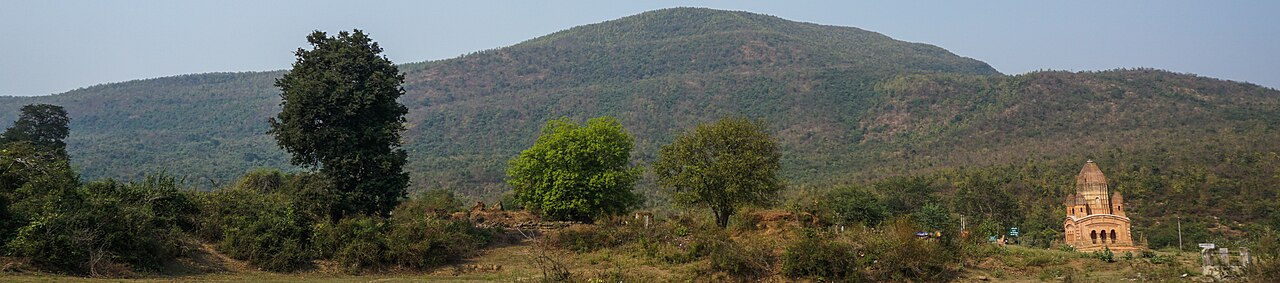
Garh Panchkot is the remnant of the seat of the Panchkot rajas, at the base of Panchet Hill. What survives is a scattered group of temple and fort structures in open ground, with hill and forest behind. It rewards slow walking more than a checklist.
The site combines easily with Panchet Dam and Baranti in one day, which is how most visitors from Asansol and Durgapur use it. Because everything is on the same short arc of road, this is one of the more forgiving day plans in Purulia.
Suggested visitor sequence
- Start with the main temple group while the light is low.
- Walk the perimeter ground before moving to the hill-side structures.
- Read the site interpretation boards where present; content and condition vary.
- Continue to Panchet or Baranti rather than doubling back.
Month by month
- October – March — The visiting season. Comfortable walking and good low light on the stonework.
- March — Palash colours the Panchet–Baranti belt in most years; exact dates vary and are recorded annually.
- April – June — Very hot and largely shadeless among the ruins. Not advisable at midday.
How to reach
Road and last-mile reality
Reached by sealed road from the Raghunathpur side. Internal site tracks are earth and can be rutted after rain. Ordinary cars are used here routinely in the dry season.
Parking, toilets, water, food, network
Safety and responsible travel
Cost
Local story and context
The Panchkot name runs through this whole landscape — hill, dam, ruins and the villages between them. The site is usually described in terms of its destruction, but what is more interesting on the ground is how ordinary it feels: cattle, footpaths and people cutting across a place that was once the centre of a kingdom.
Sources and verification log
- Purulia district — Garh Panchkot — Official listing. Checked 10 September 2026.
- Purulia district — Panchet Hill and Dam — Adjacent site context. Checked 10 September 2026.
Report an update
If a fee, a timing or a road has changed, tell us. Submissions are reviewed by an editor; we never publish user-submitted phone numbers or allegations automatically.
Send for reviewPrototype form — nothing is submitted from this page yet.